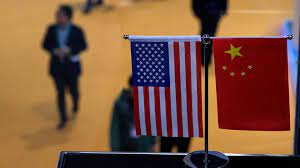
The world economies trembled, on May 2020, with the news coming from the US senate regarding the imposition of greater disclosure rules on New York listed companies (NASDAQ and NYSE). Some experts recognized this move by Trump as especially projected towards Chinese companies.
Donald Trump, aggressively moving towards its ‘America First’ policy, is keen on forcing the Chinese companies to comply with American accounting rules stating it essential pertaining to the national security of the investors and investment. The law would delist any company which does not comply with PCOAB audit for 3 consecutive years or is administered by the foreign government.
The rise in the cases of accounting dispute within Chinese companies; for instance, fabrication of transactions by Luckin coffee, the Chinese rival to Starbucks, lead to the evaporation of $5billion, some of the other reasons include presidential elections and covid-19 which served as a catalyst in taking this step.
The bill advanced with speed and unanimity by both the republicans and democrats, which is not normally seen in Washington, stressing the depth of conviction in both parties about confronting China.
India is not interested in making a choice between the two superpowers of the world; rather it proposes that countries should focus on their own economies and promote local manufacturing instead of boycotts and blame games.
Some pathbreaking steps that US can incorporate may include:
a) It should stop compelling its allies and instead should work towards providing better alternatives to what China is already providing them by strengthening its own capabilities.
b) It should encourage participation of institutional investors instead of retail investors which can help in making prudent decisions regarding allocation of funds. As the Chances of increase in fraud increase only when the investors make hasty decisions hence the investors should do speculation only after researching the track record of the company.
Some Suggestions for china include:
a) China should remove unfair subsidies from Chinese parent companies so as to ensure fair competition.
b) Relax its policy regarding imports and undergo a reform process in its stock exchange markets giving them greater role in financial corporate investment.
c) The Chinese government should amend its policy that require foreign companies in China to share their technologies with the state which leads to tech-transfers and IP theft.
Political calculations, public health fears, economic recession, broken trust, and rising nationalistic hatreds are a combustible mix that rarely produce enlightened policy decisions. But this is the very situation we find ourselves today in. we can’t expect constructive dialogue and substantive progress until the two leaders rise above their narrow political agendas and act for the greater welfare of the masses.
Cross-border listings are equally valuable for the companies, investors, and exchanges. Hence congress should continue to pressure for transparency but should not threaten to delist: as it can turn counterproductive since many U.S. investors – both individual and institutional — own stakes in them. Also most U.S. pension firms and money managers are the biggest holders of these stocks hence it could hurt returns on U.S. household savings, financial-sector profits, and the global competitiveness of U.S stock exchanges.
The timings could hardly be worse than this, with both natural and biological disasters taking a toll altogether, forcing the already trembling economy to tatter. Earlier trade war, then Covid allegations, now capital war and the upcoming ideological war because of the recent Hong Kong issue between US and China; would put a lot of pressure on all the economies. What the current situation requires is coordination-cooperation and collaborative management of the crisis by all the economies.
 Quintessentially Humanistic@myblog.com