The ongoing public health emergency has made it more obvious than ever that housing and health are intrinsically interlinked. Housing is a social determinant of health, but it is rarely considered while formulating the public health policies (PSAs). However in times like today when we are advised to stay at home in a quarantine or self-isolate ourselves due to the paucity in the number of beds in the hospital, it becomes evident that proper housing is an essential determinant in our health setting, and one cannot enjoy their right to health without being assured of safe housing.
Living without a home, rough sleeping or staying in temporary accommodation makes the destitute and homeless prone to contagious disease as they face a number of barriers in accessing appropriate health care and public health information. Due to their compromised immune systems, poor nutrition and hygiene and long-term residence in overcrowded shelters they are at a higher risk of contamination.
For instance, a recent US based study documented that there was deliberate recruitment of homeless people into dangerous pharmaceutical drug trials. Private companies who run drug studies may coerce penniless people with payments of up to thousands of dollars.
The crisis is specially affecting the homeless women as they are often denied personal health care services like pads, proper washrooms, etc. Also they become completely subservient to government officials for food supplies and for ensuring the very basic hygiene facilities.
Amidst all this, it becomes almost impossible for the homeless population of the country to adhere to government guidelines of self-isolation, maintaining more hygiene, staying at home, and strict social distancing, disarranging them from the public policy responses to the pandemic. This serves as a classic example of the fact that formulation of policies for the destitute without their consent can lead to their utter failure and ruckus.
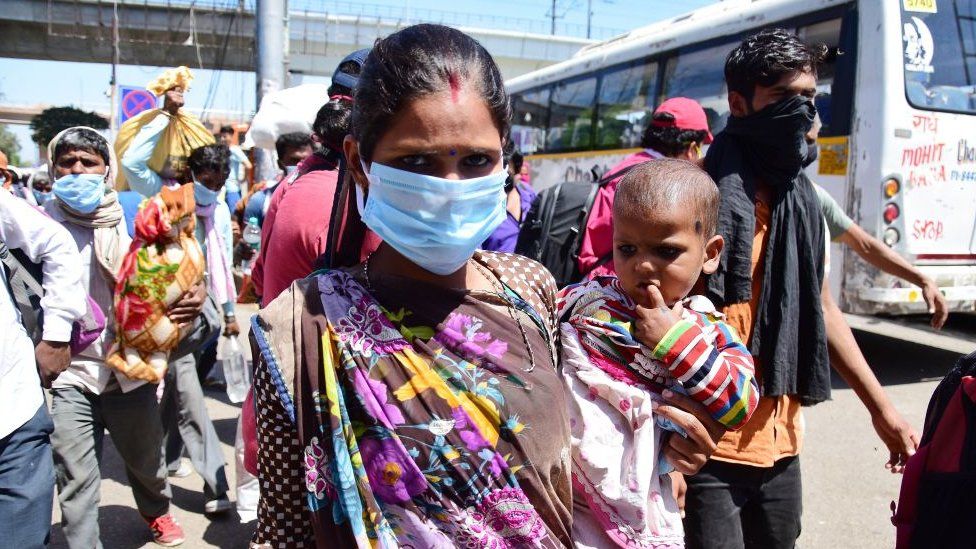
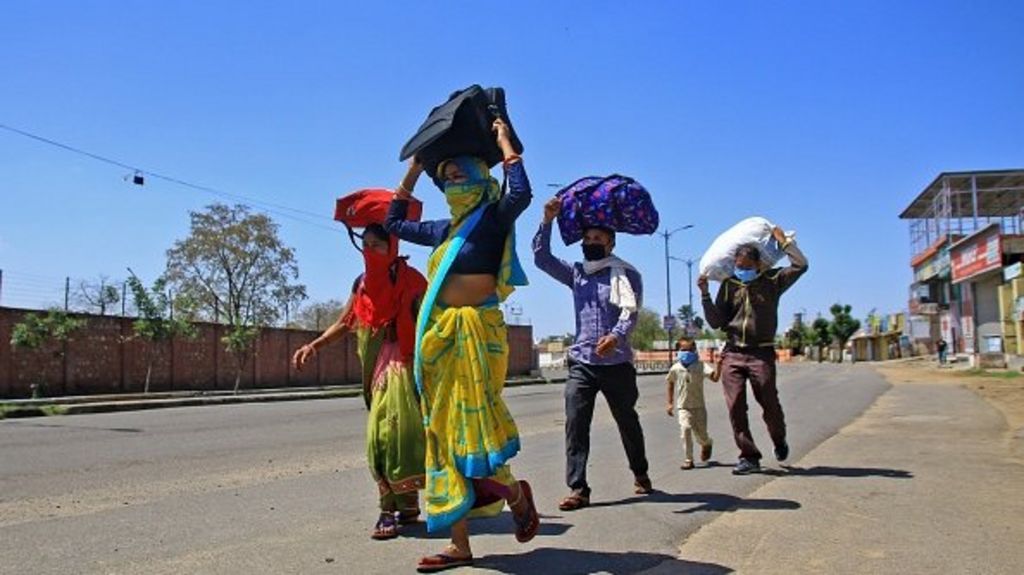
The nationwide lock down, announced by the Prime Minister which resulted in the sudden shutdown of businesses; upended the lives of millions of migrant laborers and homeless in the Indian cities.They were bound by a collective will to somehow get back to where they belong. Since for them home in the village ensures both food and social security of the family.
Among the teeming refugees of the lock down was a 90-year-old woman, whose family sold cheap toys at traffic lights in a suburb outside Delhi. She and her family ate biscuits and smoked beedis, to kill hunger. Upon inquiry she said, “We will die of walking and hunger before corona virus hits us,” surely she was not exaggerating. Last week during the month of march, a 39-year-old man on a 300km (186 miles) trek from Delhi to Madhya Pradesh complained of chest pain and exhaustion and died; and a 62-year-old man, returning from a hospital by foot in Gujarat, collapsed outside his house and died. Four other migrants, turned away at the borders on their way to Rajasthan from Gujarat where they were mowed down by a truck on a dark highway.
The staggering exodus was reminiscent of the flight of refugees during the bloody partition in 1947. Clearly, a lockdown to stave off a pandemic is turning into a humanitarian crisis.
Also amidst the corona virus pandemic, cases pertaining to domestic and sexual abuse are on a rise. A few days back, a horrifying incident took place in Bihar where a migrant woman who was suspected of Covid-19, was sexually abused in Gaya hospital where she was kept in an isolation ward. Three days later, she died due to excessive bleeding. Incidents like these questions the safety norms at these places.
Core priorities right now should include active case-finding through testing; providing access to emergency housing that is fit for isolation purposes; making existing shelters safe places for homeless people to stay; and treatment programmes.
Support for homeless people should not only include those experiencing homelessness but also be concerned with protecting those vulnerably housed who are at a higher risk of homelessness because of the economic impact of COVID-19 outbreak.
India can learn from other’s example; for instance Mortgage holidays have been announced in several countries; measures similar to these can be announced for renters, who are often more vulnerable in the short term. Specific measures targeting the insecurely housed are needed, such as a moratorium on evictions to stop people losing their housing during the pandemic.
The current pandemic clearly highlights the division among-st India’s population; on one hand there is a segment that has the window to strike plates and light divas from the vicinity of their safe homes; and on the other hand there is a segment that is determined to reach home even if it had to walk 1000s of miles barefoot. On one hand flights had been launched to bring back nationals and on the other the destitute was forced to stay in overcrowded temporary accommodation without the provision of even the bare facilities. In these trying times there is also an urgent need for the states to adhere to strict measures in order to curb the transmission from this high-risk migrant population to their hometown.
Homelessness must be considered a public health priority. A public health emergency requires emergency solutions and crisis management, and there are such initiatives including making vacant housing and hotels available for homeless people to self-isolate with adequate number of experienced doctors. The current crisis clearly show that shelters cannot replace the safe homes that are indispensable for a healthy life for all.
With this thought I Srishti Jain would be signing off 🙂

 Quintessentially Humanistic@myblog.com